
How Somalia’s NCC Deadlock Threatens The Next Phase of State-Building
How Somalia’s NCC Deadlock Threatens The Next Phase of State-Building
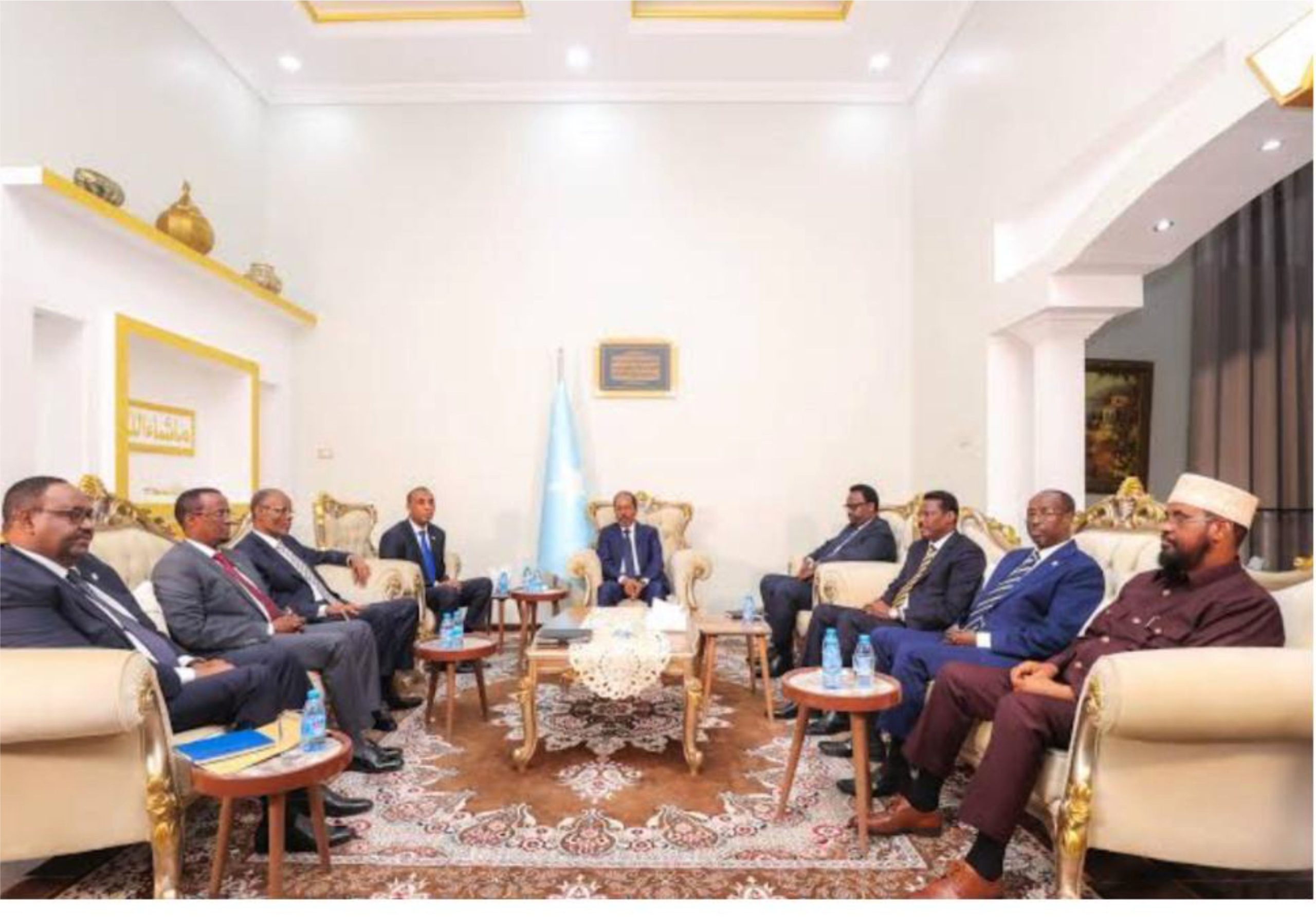
Just a few days after chairing the National Consultative Council (NCC) meeting, President Hassan Sheikh Mohamud addressed both the Upper and Lower Houses to persuade Members of Parliament to delay a planned recess.
Advantageously, the president’s request was unanimously approved in a packed session marked by political undertones. Parliamentarians are now required to debate and approve essential electoral laws to pave the way for one-person, one-vote elections in a country where leaders have been selected through clan-based politics.
The parliamentary session follows the recent NCC stalemate, in which leaders from Puntland and Jubaland abstained from national discussions. The absence of these key federal member states casts doubt on the federal government’s political efforts, leaving the country in a “wait and see” mode, where political developments could either strengthen or destabilize the nation, whether by design or by happenstance.
The NCC impasse remains a bottleneck to the federal government’s national agenda, which aims to grant Somali citizens the power to directly elect leaders. President Mohamud is keen to implement universal suffrage, despite the significant security challenges that may impede the effective conduct of direct elections. It is no surprise that the administration may face one of its most challenging political periods.
At this critical phase of political and security transition, Somalia can ill afford the political maneuvering and patronage that has emerged. Yet, hardline stances by Puntland’s President Said Abdullahi Deni and Jubaland’s President Ahmed Madobe compound an already tenuous situation, where state fragility and instability threaten the progress Somalia has made since the adoption of the federal system.
Jubaland’s Position
The standoff between the federal government and Jubaland is particularly stark. At one point, Kenya’s President William Ruto attempted to persuade President Madobe to accept the NCC outcomes but to no avail. Escalating tensions further, two federal cabinet members from Jubaland recently resigned: Abdirashid Jire Qalinle, the State Minister for Planning and International Cooperation, and Ahmed Osman Ibrahim, the Deputy Minister of Education. Both cited the federal government’s alleged marginalization of regional governments as the reason for their departure.
Following these resignations, Madobe invited federal parliamentarians from Jubaland to Kismayo for consultations on the escalating political crisis. This rift exposes deep fractures within Somalia’s political leadership. Madobe is organizing local elections in which he is a main contender, a plan vehemently opposed by the federal government that proposed term extensions for regional presidents. The upcoming Jubaland elections undermine federal efforts to transition to direct elections.
President Mohamud is said to have enlisted Kenyan mediators, including former IGAD Secretary General Mahbub Maalim, former IGAD Special Envoy for Somalia Ambassador Mohamed Abdi Affey, and former Wajir Senator Abdirahman Ali Hassan Olow, to convince Madobe to accept the NCC’s resolution for direct elections by June 2025. Madobe’s resistance, however, remains a formidable obstacle to the national push for one-person, one-vote elections.
Puntland’s Boycott
Puntland’s boycott of several NCC sessions has further complicated Somalia’s political landscape. President Deni has not only refused to attend the national platform but has also declared that Puntland will no longer recognize federal institutions. In early October 2024, Puntland’s Minister of Information, Mohamud Aydid Dirir, expressed skepticism over the NCC’s capacity to address Somalia’s urgent challenges, underscoring Puntland’s hardline stance.
The defiant posture has emboldened Jubaland’s pursuit of separate regional elections, with Garowe endorsing Kismayo’s position as aligning with the constitutional mandate of federal states to oversee their electoral processes. Puntland accuses the federal government of sidestepping constitutional requirements to conduct an inclusive review, while criticizing its push for direct elections. The widening rift between President Mohamud and Deni raises concerns for ordinary Somali citizens, as the impasse threatens national stability.
Precarious Situation
Given the ongoing NCC deadlock and impending security transition, Somalia faces a precarious political and security environment that could erode recent gains. The political discord underscores the fragility of Somalia’s federal system, which has allowed federal state presidents significant autonomy, at times undermining the authority and legitimacy of the central government. The federal government itself is in a perilous position, with potential unintended political consequences that could spark unrest, especially given the fragility of state institutions.
This political tension is causing a notable deterioration in public confidence. Many Somalis, weary of conflict and hoping for political maturity, view the current landscape with skepticism. Widespread fear suggests that, if the rift between the federal and state governments deepens and negotiations fail, Somalia’s security could be jeopardized.
Citizens, already burdened by the prolonged absence of effective governance, are unlikely to tolerate further political sideshows. The ongoing disagreements over elections and constitutional amendments add new challenges, potentially risking state collapse. In a nation where statehood is precarious, leaders must engage in responsible public discourse to address the current crisis thoughtfully.
What’s Next for Somalia?
The federal government must safeguard its legitimacy while recognizing the charged political environment that could undercut its achievements. As parliament prepares to pass electoral and constitutional amendments within the next 30 days, the country’s political discourse requires calm and deliberate action, especially from the nation’s highest leadership. President Mohamud must be open to compromise and include opposition voices in discussions about Somalia’s future.
Federal state presidents, as key stakeholders in Somalia’s national affairs, play a vital role in shaping the next phase of state-building. The federal administration should foster a conducive environment for national dialogue on critical issues like elections and constitutional reforms.
Amid growing uncertainty, the immediate implementation of one-person, one-vote elections seems improbable, particularly with Puntland and Jubaland absent. The federal government must bring these two states back to the negotiating table. Broad-based stakeholder engagement could provide the federal government with the political leverage needed to advance its national agenda and achieve its mandate responsibly.
Similarly, the leaders of Puntland and Jubaland should demonstrate political maturity by prioritizing national interests and aligning with state-building milestones. By engaging in dialogue with the government, rather than rejecting national consensus, these regional leaders could help steer Somalia toward stability and progress, sparing the nation from further political patronage and division.
By Abdirahman Muhumed.
Recent Programs
Add Your Heading Text Here
Lorem ipsum dolor sit amet, consectetur adipiscing elit. Ut elit tellus, luctus nec ullamcorper mattis, pulvinar dapibus leo.
