
President Mohamud’s Strategic Diplomacy and The Quest For A Secure Somalia
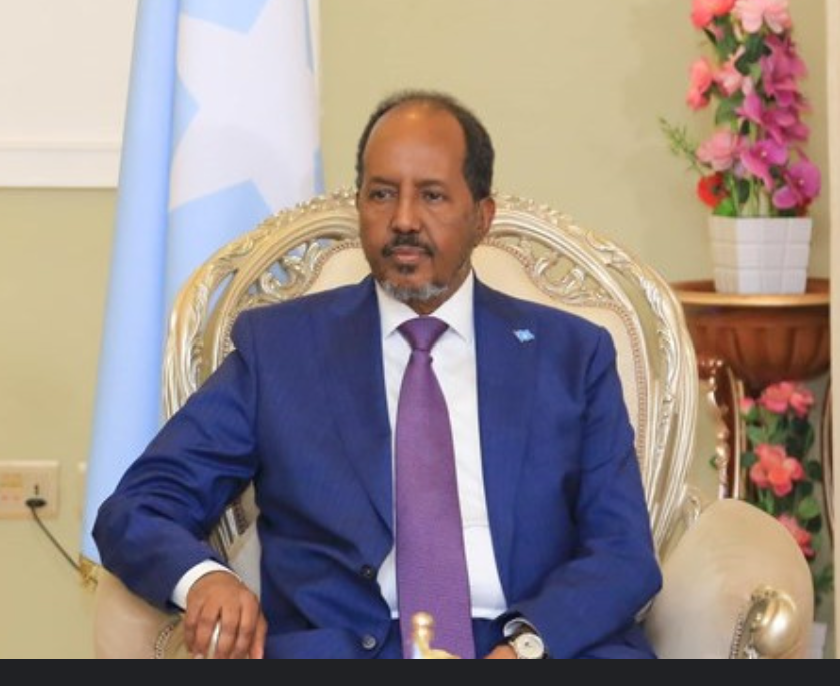
President Mohamud’s Strategic Diplomacy and The Quest For A Secure Somalia
In October 2024, Somali President Hassan Mohamud embarked on an intensive diplomatic trip to nearly all Troop Contributing Countries (TCCs) in a move to address Somalia’s security transition.
During his less-than-weeklong regional trip, President Mohamud met with leaders from Uganda, Burundi, Djibouti, and Kenya to discuss the future of Somali security as troops from the African Union Transition Mission in Somalia (ATMIS) prepare to conclude their mission by the end of the year.
President Mohamud’s diplomatic efforts aim to guide Somalia through a critical period of security transition, as the country continues to grapple with insecurity since the overthrow of Siad Barre’s military regime.
These efforts come at a time of heightened tensions with Ethiopia, as the two countries dispute Ethiopia’s recent port deal with the breakaway region of Somaliland. However, Somalia’s main priority remains its quest for a seamless security transition.
Despite the ongoing diplomatic tensions, Somalia has made notable progress in recent years, particularly in sectors like security, the economy, and social development. These gains have positioned Somalia once again on the regional and global stage, drawing positive attention.
Under President Mohamud’s administration, several strategic accomplishments mark a promising trajectory for Somalia. The country’s recent accession to the East African Community, debt relief from international lenders, Turkish seismic oil exploration initiatives, and its new seat on the UN Security Council reflect significant progress. These achievements inspire optimism for Somalia’s future.
Security Transition
The foremost challenge for Somalia remains the fight against terrorism. Somalia is at a critical juncture, where it has the opportunity to make meaningful advancements in security. For the federal government, a successful transition means preparing Somali security forces to assume full responsibility after more than three decades of insecurity driven by internal conflict and terrorism.
With around 20,000 Somali troops and a police force of 12,000, including intelligence agents, the administration of President Mohamud faces the daunting task of ensuring Somalia’s safety post-AU troop withdrawal.
The ATMIS transition is already well underway, with Somalia seeking greater autonomy in selecting TCCs. Part of President Mohamud’s recent diplomatic efforts involve persuading regional leaders to continue supporting Somalia’s security sector during this pivotal period.
In January 2025, the new African Union Support and Stabilisation Mission in Somalia (AUSSOM) will launch, a leaner mission compared to its predecessor ATMIS. This shift means Somali forces will bear a greater responsibility for national security.
The capacity of Somalia’s security forces will be tested as they assume control in one of the country’s most challenging phases. In August, the African Union’s Peace and Security Council endorsed the formation of AUSSOM, acknowledging Somalia’s security and political progress but also expressing concerns about remaining challenges.
The UN Secretary-General, together with the African Union Commission Chairperson and in consultation with Somalia and international stakeholders, was requested to submit a report by November 15, 2024, detailing the mission’s design. This strategy will be guided by a national political framework supporting Somalia’s transition from ongoing conflict to lasting peace.
Neighboring countries, including Kenya, Burundi, Djibouti, and Uganda, currently part of ATMIS, have approved the new mission but emphasized the need for sufficient funding. AUSSOM will collaborate with Somalia on a security strategy focused on strengthening Somali forces’ capacity.
The Institute for Security Studies (ISS) notes that AUSSOM will face a changed geopolitical environment, marked by rising tensions between Somalia and Ethiopia, which contributes troops to ATMIS.
Somalia has already stated that Ethiopia will not participate in the new mission and is considering Eritrea and Egypt as potential contributors. With these changes, the transition from ATMIS to AUSSOM will likely impact regional geopolitical dynamics.
Funding remains a primary concern for the African Union. The mission’s unique mandate to bolster Somali forces’ operational capacity requires sufficient resources. AUSSOM, with approximately 11,000 troops, is expected to operate until 2029.
Role of Somali Security Forces
With the Somali National Army (SNA), majorly leading the fight against terrorism and domestic conflicts, President Mohamud’s administration faces a monumental task that could define Somalia’s future.
The SNA must enhance its capabilities to help Somalia achieve stability and further state-building goals. Army Chief Major General Ibrahim Sheikh Muhyadin will shoulder the responsibility of not only professionalizing the military but also building capacity to manage the current security transition.
Despite persistent challenges, the SNA has made strides in curbing the influence of groups like Al-Shabaab. In August, Prime Minister Hamza Abdi Barre reported that security forces had liberated over 200 districts and villages from Al-Shabaab. With international support, the SNA has recently conducted significant military operations across the country.
As part of the transition, Somali forces have already taken control of six Forward Operating Bases (FOBs) from AU troops. More FOBs are scheduled for handover, signaling Somalia’s increasing reliance on its security forces to achieve stability and restore state authority.
International Support
Somalia continues to seek international support to help its federal government achieve long-term stability. Genuine international partnerships are essential to finalize state-building efforts, enhance security, and rebuild the economy.
Supporting Somalia’s transition from fragility to resilience and growth demands a robust, coordinated international effort. Now more than ever, the international community’s political and security agenda for Somalia should be reinforced to foster progress.
In recent years, Somalia has made strides, transitioning from a “failed” state to a “fragile” one, with progress in establishing federal and state institutions. Although Somalia’s political transition is ongoing, including discussions on a one-person-one-vote election, President Mohamud’s administration will need to navigate a challenging political and security landscape.
Through diplomatic initiatives, economic partnerships, and governance improvements, Somalia is slowly establishing itself as a credible regional player. With continued international support, President Mohamud’s administration may elevate Somalia’s standing on the global stage and bring the country closer to lasting stability and self-reliance.
Recent Programs
Add Your Heading Text Here
Lorem ipsum dolor sit amet, consectetur adipiscing elit. Ut elit tellus, luctus nec ullamcorper mattis, pulvinar dapibus leo.
